
Let's talk about the weird guilt nobody mentions
You spent years—maybe decades—calibrating your pleasure around someone else. Their rhythm, their preference, their schedule. And now you're alone. The guilt isn't about sex itself. It's about permission.
Here's what I hear from clients over and over: "Is it selfish to focus on my own pleasure now?" The answer is so firmly no that I'm going to say it twice. It's not selfish. It's essential.
Why solo play after a long relationship feels different
When you've been partnered, your body learned a specific pattern. Partner initiates. You respond. There's reciprocity baked in. You weren't taught to want something just because you wanted it. You learned to want things in response to someone else's desire.
Solo play flips that completely. There's no one to respond to. No one waiting. No one's pleasure on the line but yours. For a lot of people, especially women, that's genuinely disorienting.
The good news: that disorientation fades fast. Usually within 2-3 weeks of consistent solo exploration.
Why a lemon clitoral vibrator changes the game
A lemon vibrator—specifically, something like the Lem's signature suction design—works differently than partnered touch. It's not replicating a partner. It's teaching your body its own language. Suction stimulation hits nerves in a way that manual touch (yours or anyone else's) can't replicate. This is actually useful, because it means solo play isn't a hollow substitute for partnered sex. It's its own thing entirely.
When you use a clitoral vibrator alone, you're not trying to recreate something you lost. You're discovering something new. That mindset shift matters more than the toy itself.
Starting the conversation with yourself
Before you even touch the Lem, you need to get clear on one thing: what are you actually looking for? Stress relief? Pleasure for its own sake? A way to reconnect with your body? Sleep? All of the above?
I ask this because a lot of people treat solo play like a performance they're failing at. "I should be having intense orgasms." "I should feel something by now." Shoulds are the enemy here. Start instead with curiosity. Not "Will this work?" but "What does my body actually want right now?"
The actual mechanics: how to start
Set up a real space. Not the bathroom at 10 p.m. before bed (that works sometimes, but it's rushed). Find 20 minutes when you won't be interrupted. Close the door. Put your phone on silent. This isn't punishment. This is you saying your pleasure matters enough to carve out time for it.
Start with breathing, not the toy. Spend 2-3 minutes just noticing what's happening in your body. Where's tension? Where's interest? This sounds meditative and slightly annoying, but it actually rewires your brain. You're training yourself to notice your own signals instead of waiting for someone else to initiate them.
Low intensity first. The Lem (or any lemon suction vibrator) starts gentle. Begin on the lowest setting. Some people expect immediate sensation. Your clitoris is more sensitive than you think, especially if you've been with one person for years. Let it wake up slowly.
Don't skip lubrication. Water-based lube makes everything easier. It sounds like a tiny thing, but it changes the whole experience. The sensation is smoother, the pressure spreads better, and you won't have that weird dry friction that makes you tense up.
The emotional part that nobody gets right
You're going to feel weird. Maybe awkward. Maybe a bit guilty, even though you know logically that guilt is ridiculous. That's completely normal and it doesn't mean anything is wrong.
Most of my clients report that the first 3-5 sessions feel uncomfortable. Not physically. Emotionally. Like they're doing something they shouldn't be doing. By session 6 or 7, that feeling evaporates. The body adapts. The shame quiets down.
If you find yourself heading into a spiral ("I'm alone, I'm unlovable, I should be with someone"), stop. Pause the vibrator. That's not about the toy or about solo play. That's grief, and it's real, but it's separate from pleasure. They don't have to live in the same moment.
What success actually looks like
It's not always an orgasm. Sometimes success is 15 minutes where you feel good in your body and nothing else is demanding your attention. Sometimes it's discovering a pattern or an intensity level that works. Sometimes it's just showing up and reminding your nervous system that pleasure is yours to take.
Over time (and this usually takes 2-4 weeks of regular exploration), most people find that solo play becomes a way to regulate stress, sleep better, and feel more grounded in their body. The orgasms (if they happen) are a bonus. The actual magic is the reclamation.
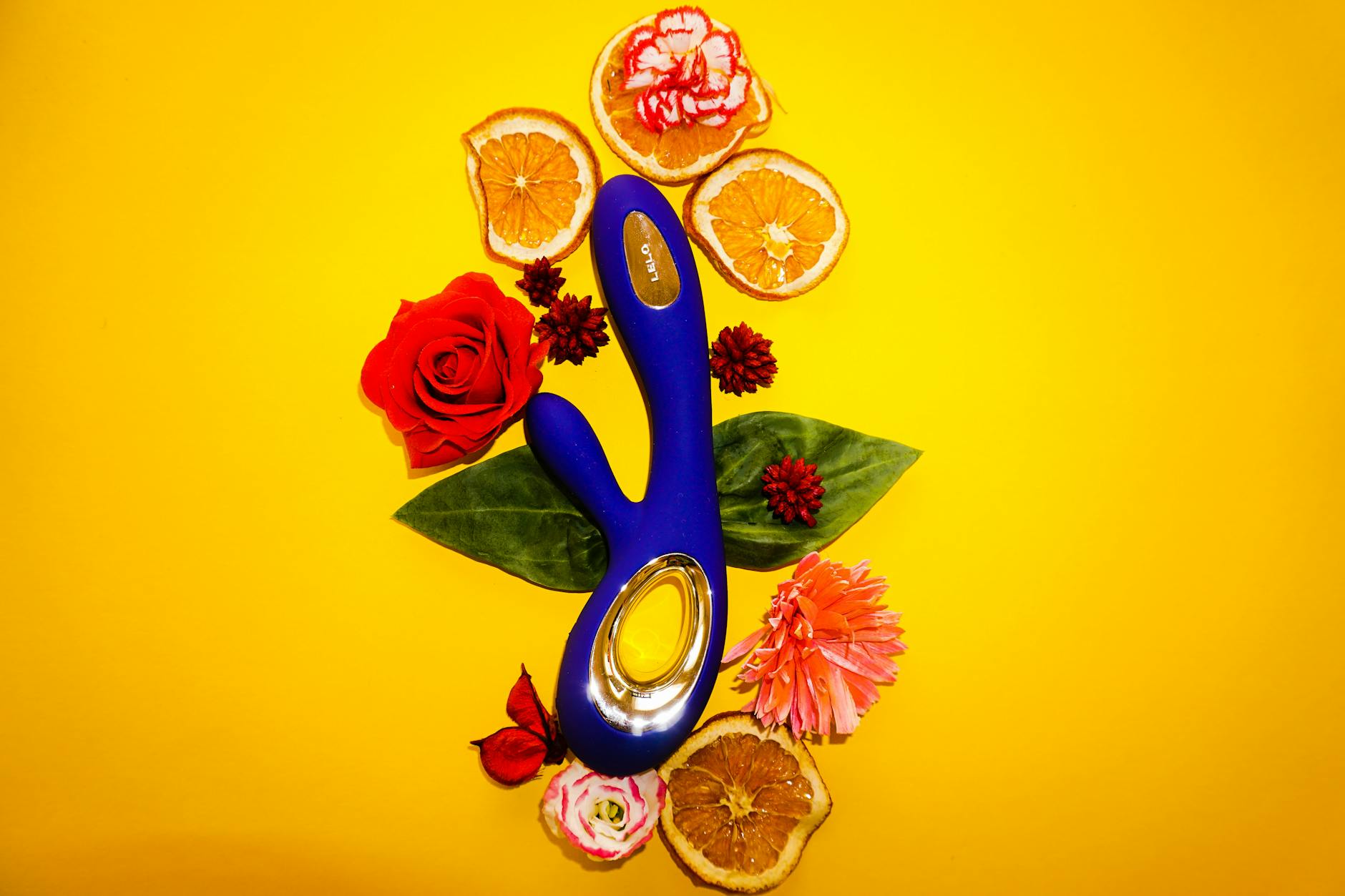
Photo by DRT.fm on Pexels
Handling the comparison trap
You might find yourself thinking: "This isn't as good as when my partner did it." That's a trap. They're different experiences. A lemon clitoral vibrator does something a hand or a mouth can't do. It's not better. It's not worse. It's distinct.
When the comparison shows up (and it will), try this: "That was then. This is now. Both are real." You're not replacing partnership. You're building a relationship with your own body that doesn't depend on anyone else. That's actually revolutionary for a lot of people.
Pacing and rhythm: finding what sticks
Some people dive in daily. Others prefer once or twice a week. There's no right cadence. The only rule: it should feel like something you want to do, not something you're checking off a list.
I usually suggest starting with 2-3 times a week for the first month. That's enough to build a habit and get past the awkwardness, but not so much that it becomes obligatory.
When to reach out for support
If after 4-6 weeks of regular practice you're still feeling profound disconnection from your body, or if there's physical pain, talk to a therapist or a gynecologist. Sometimes what feels like emotional resistance is actually something physical—past trauma, pelvic floor tension, hormonal shifts. All of it is fixable, but it helps to have professional eyes on it.
Solo play is not therapy. It's a tool. A good therapist can help you use that tool more effectively, especially when hormonal changes affect arousal or when you're working through relationship grief.
The bigger permission
Here's what I want you to know: years of partnered sex didn't train you wrong. You learned a specific skill set. You learned responsiveness. You learned generosity. You learned to read another person's body.
Now you get to learn something else. You get to be selfish about your own pleasure. You get to take 20 minutes and ask only "What do I want?" without factoring in anyone else's answer. That's not a step backward. That's an upgrade.
A lemon sexual toy is just plastic and suction. The real work is the permission you're giving yourself. Everything else follows from that.
People also ask
Is it normal to feel awkward using a lemon vibrator alone for the first time?
Completely normal. Most people feel some combination of awkward, guilty, or performative the first few times. Your body has been trained to respond to external input. Solo play is teaching it to generate its own signals. That's a recalibration, and recalibrations take a few tries. Give it at least five sessions before you decide it's not working.
How long should a solo play session last?
Anywhere from 10 to 40 minutes, depending on what you're looking for. If you're practicing before bed, 10-15 minutes is often enough to relax your nervous system. If you're exploring for pleasure, 20-30 minutes gives you time to warm up and experiment. Longer isn't better. Presence is.
What if I can't orgasm alone but I could with a partner?
This is incredibly common and usually it's about pressure. When a partner's involved, there's external validation built in. Alone, your brain can get caught in "Am I doing this right?" Instead, reframe: you're not trying to orgasm. You're trying to notice sensations. Spend time exploring different patterns and intensities on your lemon clitoral vibrator without an outcome in mind. Orgasms usually show up once the pressure drops.
Can using a lemon vibrator alone help me move forward after a breakup?
It can be part of moving forward, but it's not a substitute for grief work. Solo play helps you remember that your body is yours. It helps reconnect you to pleasure as something independent of partnership. But it won't process the emotional loss. That needs time, possibly therapy, and self-compassion. The vibrator is a tool for reclamation, not for healing the relationship wound itself.
Should I tell my therapist I'm using a lemon adult toy solo?
If you're in therapy processing a breakup or relationship trauma, yes. Not as a confession, but as information. A good therapist will see it as a sign of healthy self-care and integration. It gives them context for where you are in your healing. If your therapist acts judgmental about that, that's information about your therapist, not about you.
How do I know if I'm ready for solo play or if I need more time?
You don't need a certain amount of time. You need a certain intention. If you're exploring solo play because you genuinely want to reconnect with your body, you're ready. If you're doing it to "prove" you're over someone, or to fill an emotional void, pump the brakes. Use those feelings as a cue to journal or talk to a therapist first. Pleasure works best when it's an act of self-love, not self-punishment.
The takeaway
Lemon vibrators aren't magic. They're tools. But what makes them useful is the permission they represent. Permission to take up space. Permission to want something just because you want it. Permission to spend time and attention on your own pleasure, with no one else's satisfaction on the line.
That's the real transition. The vibrator is just the beginning. If you're navigating solo play after years of partnership and feeling stuck, reach out. There's no shame in wanting support through this.
Your pleasure matters. Alone or partnered, it matters equally.