Let's start with what nobody says out loud
Postpartum recovery isn't linear, and it definitely isn't romantic. Your body has done something monumentally significant. The timeline for feeling like yourself again has nothing to do with the six-week clearance from your doctor and everything to do with your nervous system, your hormones, your sleep, your identity, and honestly, whether anyone in your life is making you feel like your worth depends on being "back to normal."
Pleasure feels far away right now. That's not a sign something is wrong. It's a sign you're human and your body just went through massive change.
Why pleasure feels missing (and where it actually goes)
Three things happen after childbirth that make desire evaporate.
First, your oxytocin is redirected. The same hormone that creates pleasure during sex is now bonding you to your baby. Your brain literally can't split focus the way it used to. You're not broken. You're a new mother whose neurochemistry has been reprioritized by survival.
Second, touch starvation collides with touch overload. You're being touched constantly by your baby, but not in ways that feel good to you. When your partner reaches for you, your nervous system says "no more." This is called "touch saturation," and it's one of the most misunderstood parts of early motherhood.
Third, fatigue rewires pleasure entirely. Your brain allocates resources to survival. Sleep deprivation doesn't just make you tired. It suppresses dopamine production, flattens arousal pathways, and makes even things you loved feel gray. A lemon clitoral vibrator can't fix sleep debt, but it can work with your nervous system instead of against it.
What changes physically (and what doesn't)
If you had a vaginal birth, tissue is still healing. Stitches, even if they dissolved weeks ago, left scar tissue. The pelvic floor, which bore the weight of pregnancy and the work of labor, is weak and sometimes in spasm. Prolactin, the milk-production hormone, is at an all-time high. This hormone actively suppresses estrogen. Lower estrogen means thinner vaginal tissue, less lubrication, and often reduced clitoral sensitivity.
If you had a C-section, abdominal incision tissue is remodeling under the surface for up to two years. Nerve healing is slow. Many people report that anything involving that area feels either numb or hypersensitive.
Here's what hasn't changed: your clitoral nerve endings still exist. Your capacity for pleasure is still there. It's just sleeping, and it needs the right conditions to wake up.
The honest conversation with your partner (if you have one)
This might be the hardest part. If your partner is waiting for "permission" to approach you sexually, waiting for the six-week mark to pass, or assuming that because you're cleared medically you're ready emotionally, you need to say that out loud right now. Don't assume they understand.
You might say something like: "My body is healing. I need touch right now, but not sexual touch. When I'm ready to explore pleasure again, it's going to look different than before. I might not want penetration. I might want something quick and low-pressure. I need you to meet me where I am, not where you think I should be."
That conversation prevents resentment from building. It also prevents you from having sex you don't actually want just to get your partner off your back. That pattern, repeated, teaches your nervous system that your body isn't yours.
Starting small: lemon vibrators for slow reconnection
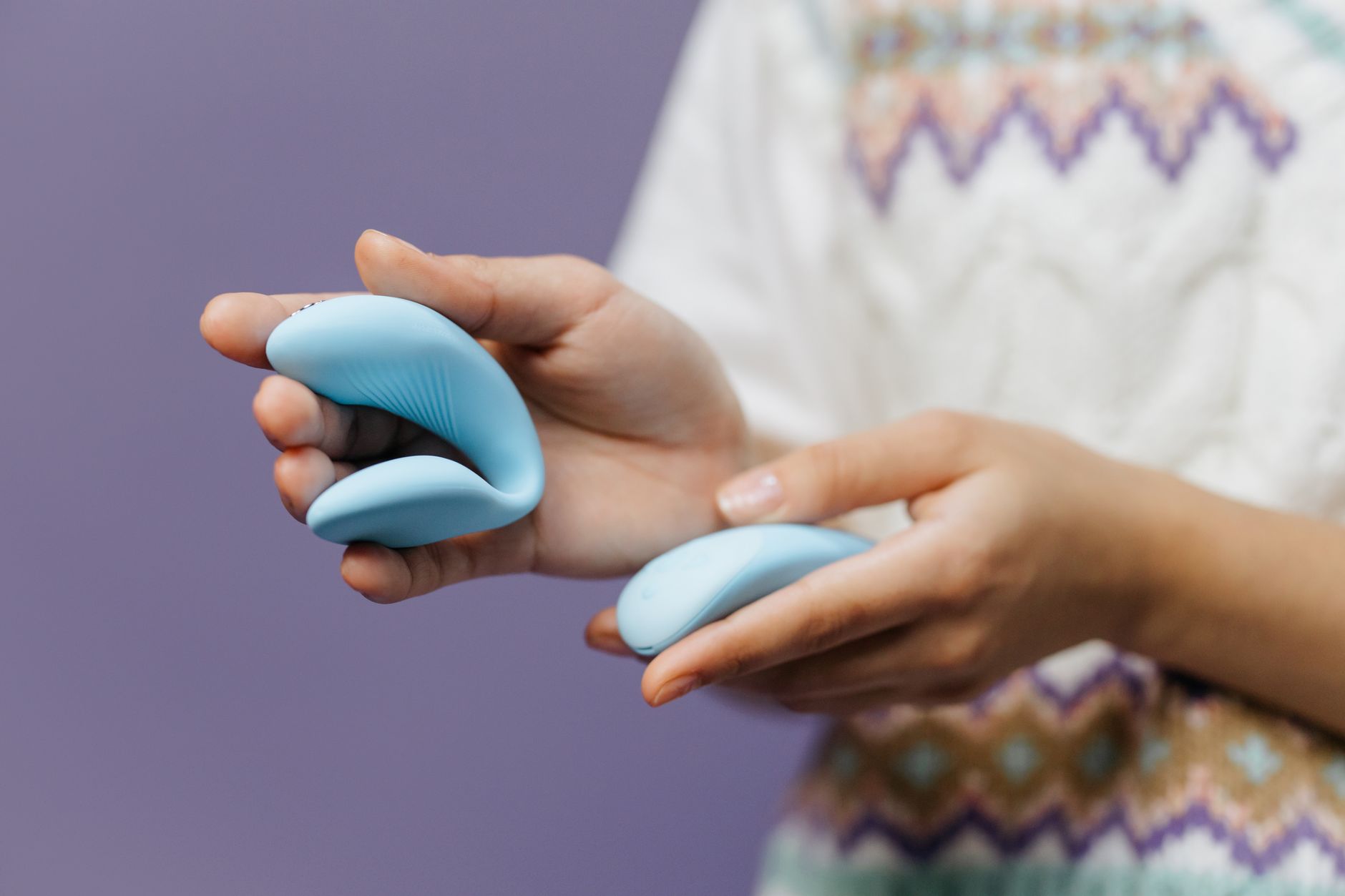
A lemon clitoral vibrator is ideal for postpartum recovery because it requires zero penetration, zero pelvic floor engagement, and can work with interrupted, fragmented attention.
Here's how to start:
Timing matters more than duration. Wait until your baby is actually asleep (not "asleep in your arms"). Five minutes of real alone time is better than twenty minutes of listening for crying. Your nervous system can't relax if you're half-waiting to be needed.
Start clothed. Yes, clothed. Use the Nancy Lem vibrator through underwear first. This creates a buffer that reduces intensity and lets you ease back into sensation gradually. Your clitoris might feel raw or overstimulated. Letting the vibration reach you indirectly is gentler.
Low settings only. The suction patterns on a lemon vibrator are gentle by design. Start at pattern 1 or 2. You're not chasing an orgasm. You're reintroducing your body to pleasure. This distinction matters.
One session a week, maximum, at first. Your nervous system is stretched thin. Too much too soon triggers the opposite effect. You'll feel more numb, not more alive.
What if you don't have an orgasm (and why that's actually fine)
Many people report that orgasms feel weird or blocked for months after childbirth. Your brain is literally in a different state. The cascade of neurochemicals that creates an orgasm requires sustained focus. When you're waking up three times a night, sustained focus is a luxury.
Don't chase it. The orgasm will come back when your nervous system feels safe enough to surrender again. Right now, the goal is sensation. Notice what feels good. Notice what feels neutral. Notice what feels uncomfortable. That information is gold.
Many postpartum people find that their first orgasms come back through solo pleasure, not partnered sex. There's less pressure, less performance anxiety, and you can stop whenever you want. A lemon sexual toy, used alone, gives you that autonomy.
The pelvic floor and why rest matters as much as stimulation
Your pelvic floor has been through trauma (even in uncomplicated births). It's clenched, weak, and confused about its job.
Before you use any vibrator, spend a week just learning to relax your pelvic floor. This sounds strange, but most people can't do it. Lie down. Breathe in through your nose for four counts. As you exhale, imagine your pelvic floor releasing like an elevator descending. Hold for four counts. Repeat five times. Do this twice a day for a week.
Why? Because a tight pelvic floor blocks arousal and makes stimulation feel sharp instead of pleasurable. Once you can consciously relax, you can actually feel a lemon vibrator working for you instead of against you.
If you still feel pain during any kind of touch two months postpartum, see a pelvic floor physical therapist. This is not something to wait out.
When to involve your partner (and how)
At some point, you might want to add your partner back in. That's not a deadline. That's whenever you decide.
If and when you do, start with the same low-pressure approach. Use the lemon vibrator with them present, but you controlling the experience. Let them watch. Let them help by holding the toy if you want. But you decide when to start, how long, and when to stop.
Many couples find that reintroducing pleasure together feels less like "getting back to sex" and more like rediscovering each other. It shifts from performance to exploration.
The timeline you actually need to know
Three months is when many people report desire starting to return. Six months is when most people feel somewhat themselves again. A year is when the nervous system truly recalibrates. These are tendencies, not rules.
You might be slower. You might be faster. Both are normal. Comparing your timeline to anyone else's is a waste of energy you don't have.
FAQ: postpartum pleasure and lemon vibrators
Is it safe to use a lemon vibrator if I'm breastfeeding?
Completely safe. Nothing you do with a clitoral vibrator affects milk supply or composition. Prolactin will still suppress desire, but the vibrator itself is fine. The main barrier is time and mental space, not biology.
What if I'm having intrusive thoughts about my body?
Postpartum intrusive thoughts are extremely common and usually fade with time and sleep. If they're severe or persistent, talk to a therapist who specializes in postpartum mental health. A vibrator won't fix intrusive thoughts. Processing them will. You deserve support.
Can I use a lemon clitoral vibrator if I had a C-section?
Yes, as long as your incision is fully healed (no open areas, no drainage). Avoid anything that puts pressure on the scar site directly, but vaginal stimulation is fine. The abdominal incision is separate from that experience.
My partner wants to use the vibrator on me but I feel uncomfortable. Is that normal?
Completely. Many postpartum people need to reclaim their body as their own before sharing it again. Use the vibrator solo first. When you're ready for partnered play, you lead. Your comfort is the only metric that matters.
How do I explain to my partner that I need slow recovery without hurting their feelings?
Honestly. Tell them: "I'm not rejecting you. I'm protecting my healing. When I'm ready, I want to come back to us together, and that's going to happen on a timeline that feels safe for my body." A partner who loves you will wait. That's not negotiable.
What if pleasure still feels distant after a year?
See a therapist who specializes in postpartum recovery and sexual health. Sometimes the barrier is hormonal (undiagnosed thyroid issues, for example), sometimes it's relational, sometimes it's just that your sexuality has genuinely shifted. Any of those is worth exploring with professional support.
The thing nobody tells you
Your body isn't broken. It's not defective. It's not "taking too long." It's healing at the pace it needs to heal. Pleasure will come back. It might look different. It might feel different. You might want different things than you did before.
That's not loss. That's evolution.
If you're ready to explore reconnection at your own pace, we're here. And if you're not ready yet, that's equally valid. Your timeline is yours.