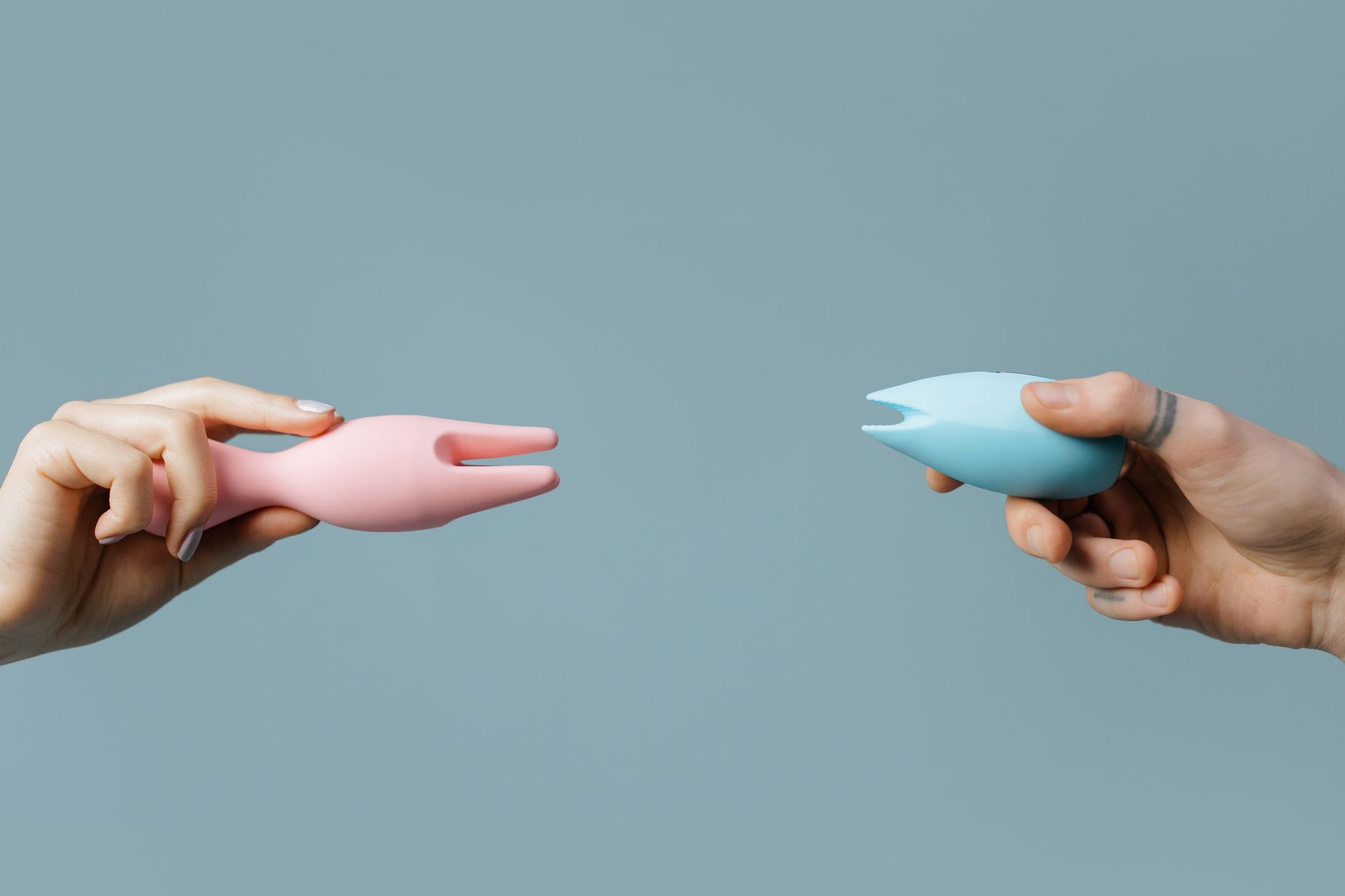
How to Use a Lemon Vibrator When Cervical Sensitivity Causes Discomfort
Cervical pain during arousal is real, it's treatable, and it doesn't mean you have to give up pleasure. Here's exactly how to use a lemon clitoral vibrator when sensitivity is an issue.
Cervical sensitivity during sex isn't rare, and it doesn't mean your body is broken. It means you might have endometriosis, fibroids, IBS, or simply a sensitive cervix that responds poorly to deep pressure or certain types of contact. The good news: a lemon clitoral vibrator like the Lem is designed to sidestep this problem entirely. Because it focuses on external clitoral stimulation through suction, not internal penetration or deep thrusting, it lets you access pleasure without triggering that sharp, aching sensation.
Your cervix is sensitive for reasons that have nothing to do with sensitivity itself. It's packed with nerve endings, and it's deeply connected to your pelvic floor. When you're aroused, your uterus expands and pulls upward into the pelvis, which actually reduces the depth of the vaginal canal. If your cervix has inflammation, adhesions from endometriosis, or just sits lower than average, deeper pressure during arousal can feel like a dull ache, sharp pinching, or a feeling like someone's pressing directly on a bruise.
The reason this matters for lemon clitoral vibrators is simple: you don't have to choose between pleasure and pain. Because a device like the Lem works on your clitoris, not inside your body, cervical contact is entirely optional and completely within your control.
Your clitoris extends internally in two branches called crura. When you stimulate the external clitoral glans with suction, you activate those internal branches without requiring any internal contact at all. This is why clitoral vibrators are the go-to tool when internal penetration causes problems.
The Lem in particular uses gentle suction rather than vibration, which means no jarring sensation and no need for you to tense your pelvic floor to "grip" the device. You're in complete control of intensity, speed, and where the sensation happens.
If you're nervous about cervical contact, the position you're in during partner sex shapes what happens. But solo play with a lemon clitoral vibrator erases most of that worry because you're not dealing with internal depth at all.
That said, angle still matters slightly. Here's what I recommend:
Sit or recline with your back against a pillow. This lets you see what you're doing, stay relaxed, and shift your position instantly if anything feels off. Lying completely flat on your back sometimes creates subtle tension in the pelvic floor that can make sensitivity worse. A supported recline is gentler.
If you use the Lem with a partner present, the same rule applies. Stay upright or semi-reclined. If your partner is using the device on you, they should approach from the front so you have full view and can signal immediately if anything shifts.
Before you start, understand this: you're not trying to prove anything. You're exploring what feels good without triggering pain. That's the whole point.
Step one: warm up without the device. Spend 10-15 minutes on whatever normally builds arousal for you. Mental connection, partner contact, fantasy, whatever works. Your cervix and pelvic floor relax more readily when you're genuinely aroused. Skip this and you're starting from tension, which makes sensitivity worse.
Step two: start on the lowest suction setting. The Lem has multiple intensity levels. Begin on setting 1. This is not boring or weak. It's a gentle, rolling sensation that activates your clitoral nerve endings without aggressive pressure. Many people find their best orgasms at lower intensities anyway because there's room for the sensation to build.
Step three: pay attention to pelvic floor release. This is the part most people miss. If you notice yourself tensing your pelvic floor as intensity increases, pause. Breathe. Let it soften. A tense pelvic floor amplifies cervical sensitivity. A relaxed one dampens it. You can even practice kegels beforehand (squeeze and release) just to train yourself to notice the difference.
Step four: move through patterns slowly. The Lem has different pulse patterns. Don't jump between them frantically. Try one pattern for a full minute. Notice what your body wants. Then switch. This builds arousal more reliably than constant novelty.
Step five: stop before you're at absolute maximum. This sounds counterintuitive, but it works. If you push to the highest intensity and hold it, you're increasing pelvic floor tension and bringing your cervix down lower. Orgasm happens when you ease back slightly. It feels better and causes less discomfort afterward.
Pain during pleasure is not something to push through. It's information.
If you feel a sharp or aching sensation, stop immediately. Don't tough it out. Here's why: you're building a neural association between arousal and pain, which trains your body to tense up next time. That makes the problem worse over time.
Instead, pause. Breathe. Shift your position slightly. Maybe your pelvic floor tightened without you noticing. Sometimes just 30 seconds of conscious relaxation fixes it. If the pain returns, stop the session. There's no failure here. You're gathering data.
If pain is consistent during clitoral stimulation (which is rare), you might have vulvodynia or another condition worth discussing with a pelvic health physical therapist. That's a different conversation than cervical sensitivity, but it's equally treatable.
Cervical sensitivity sometimes flares up in the hours or days after arousal, especially if you pushed through minor discomfort during the session. Smart after-care reduces that.
After solo play, lie still for 5-10 minutes. Let your pelvic floor stay relaxed. Hydrate. If you notice any cramping sensation afterward, that's your signal that you went too intensely. Next time, dial back the duration or intensity slightly.
If you're playing with a partner, communicate clearly about what happened. "I felt some cervical tension around minute 12" is infinitely more useful than vague pain description. Your partner can adjust their approach if they're involved, or at minimum, they understand the boundary.
Cervical sensitivity is common, but it's also sometimes a sign of something that benefits from treatment. See a gynecologist if pain is sharp, lasts for days, or is worsening over time.
Endometriosis, fibroids, pelvic inflammatory disease, and adenomyosis can all cause cervical or deep pelvic pain. None of these mean you can't have pleasure. But they sometimes benefit from treatment that makes pleasure easier.
A pelvic health physical therapist is also worth exploring. They can assess your pelvic floor tension, teach you better relaxation techniques, and sometimes identify adhesions or restrictions you didn't know you had.
Using a lemon clitoral vibrator when you have cervical sensitivity isn't a workaround. It's actually the optimal approach. You're centering the part of your body that's designed for external stimulation, using a device (the Lem) that respects your sensitivity, and building arousal patterns that feel sustainable long-term.
Many people with cervical sensitivity report that clitoral vibrators give them their best orgasms precisely because there's no internal pressure involved. The sensation is focused, controllable, and yours entirely.
Absolutely. Cervical position doesn't affect clitoral vibrator use at all because you're not engaging with your cervix during the session. The Lem and other lemon suction toys work on external anatomy, so uterine position is irrelevant. If you do internal play with a partner afterward, uterine position matters for comfort then, but that's a separate concern.
No. In fact, the opposite tends to happen. Regular gentle clitoral stimulation can actually improve pelvic floor relaxation over time, which reduces cervical sensitivity during partnered sex. You're training your nervous system to associate arousal with relaxation, not tension. That's protective long-term.
Cramping usually signals that you went too intensely or for too long, or that your pelvic floor stayed tensed during the session. Next time, reduce duration by 5-10 minutes, keep intensity below level 4, or add more dedicated pelvic floor relaxation before you start. If cramping persists for more than a few hours or becomes sharp, contact your gynecologist. It's probably nothing serious, but it's worth ruling out.
Yes, with clear communication. The same rules apply: lower intensity settings, relaxed position, breaks if pain appears. The advantage of having a partner involved is that they can watch your facial expression and pelvic floor tension (people usually tense unknowingly), and they can pause instantly if needed. Just make sure they understand that the goal is pleasure without pressure, not pushing toward the fastest orgasm.
Not necessarily. Cervical sensitivity exists on a spectrum and is usually just anatomy. That said, it's sometimes connected to endometriosis, fibroids, adenomyosis, or pelvic inflammatory disease, all of which can affect fertility. If you're trying to conceive and have cervical pain, it's worth mentioning to your doctor. But cervical sensitivity alone doesn't tell you anything about your fertility status.
Most of the time, yes. Post-surgical adhesions or scar tissue can sometimes make sensitivity worse, but clitoral stimulation is still safer than internal pressure. Start gently, communicate with your surgeon about your timeline for sexual activity, and stop if anything feels sharp or unusual. If you had extensive pelvic surgery, a pelvic physical therapist is worth consulting before restarting pleasure activities.
Cervical sensitivity is treatable, manageable, and doesn't mean you give up pleasure. Using a lemon clitoral vibrator is one of the smartest approaches because it centers external stimulation, puts you in control, and lets you explore what feels good without unnecessary internal pressure. Start low, stay present, listen to your body, and remember that pleasure should never hurt. If it does, pause and reassess. Your body is asking for information, not punishment.