Let's talk about the slowdown
Your body used to respond in minutes. Now it's taking 20, 30, sometimes 40 minutes to feel genuinely aroused. And here's what makes it worse: you're wondering if something's wrong with you, or if your partner's touch isn't working the way it used to.
Neither is true. Arousal timing shifts. It's not a failure. It's just different, and it has specific reasons behind it.
Why arousal actually slows down
There are at least five legitimate explanations, and most people experience more than one at the same time.
Stress and cognitive load. Your brain is the most important sex organ, and if it's running a background tab of bills, work deadlines, or family obligations, arousal takes a backseat. The body won't prioritize pleasure when it perceives threat or distraction.
Hormonal shifts. Whether from aging, hormonal birth control, antidepressants, or other medications, changes in estrogen, testosterone, and dopamine directly affect how quickly blood flow reaches your genitals and how responsive nerve endings become. This isn't psychological. It's biological.
Partner mismatch. If your partner's arousal timeline hasn't shifted the same way yours has, there's now a gap. They're ready in 10 minutes. You're not ready until 25. That gap creates pressure, which kills arousal even faster.
Desensitization from routine. If foreplay has been the same sequence for years, your nervous system stops paying attention. Novel sensation is what wakes up arousal. Repetition puts it to sleep.
Pelvic floor tension. When muscles stay chronically tight, blood flow to the clitoris and vulva becomes restricted. A tense pelvic floor is basically a dimmer switch on your own arousal.

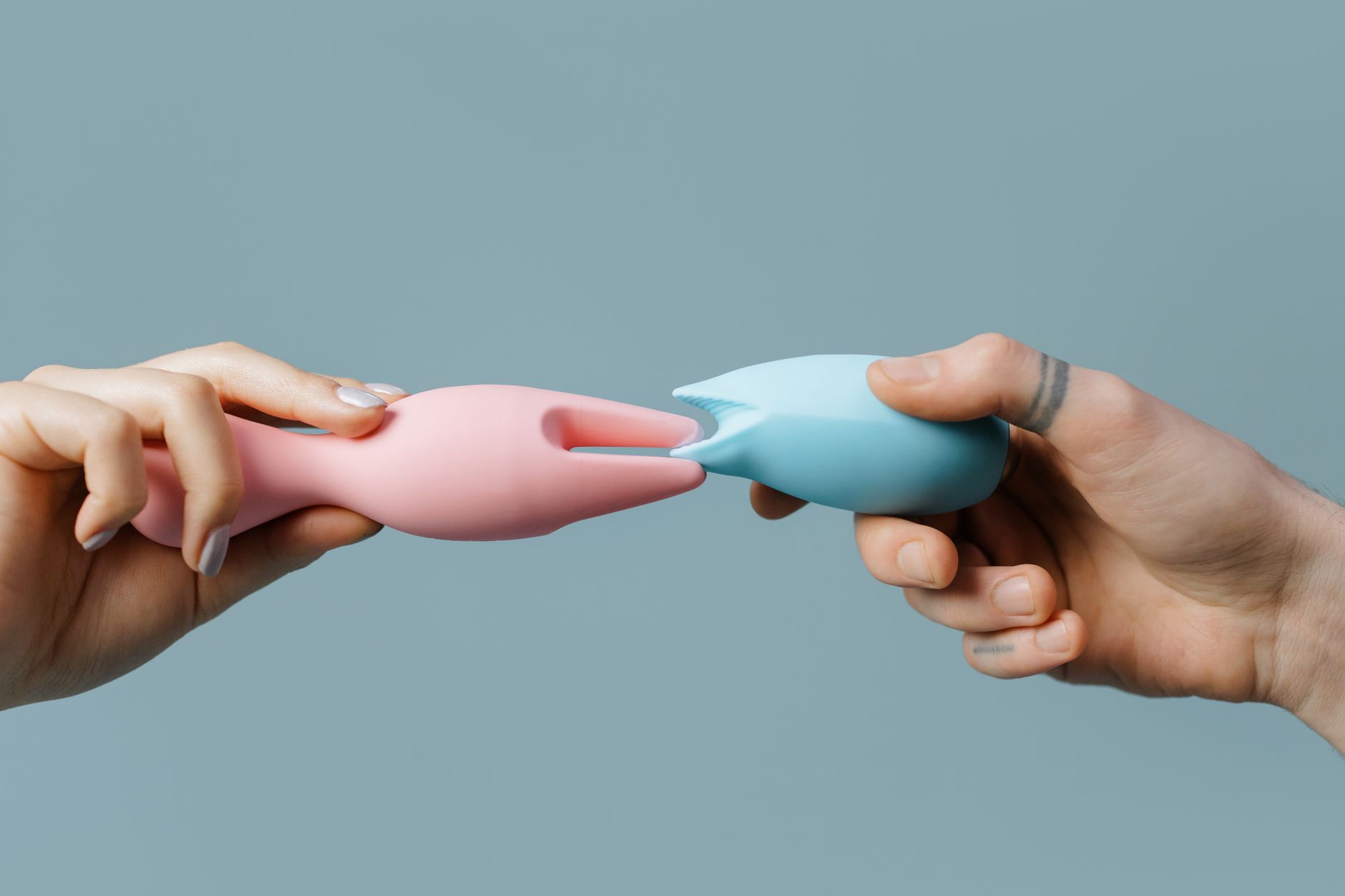
Photo by FounderTips on Pexels
How the Lem actually helps with longer arousal windows
Most vibrators are built for speed. They're designed to get you from zero to sixty in a single burst of intensity. That works fine if your arousal curve is steep. But if you need 30 minutes to build, a standard vibrator becomes either boring (because you're using the same intensity the whole time) or exhausting (because it's too much too soon).
The Lem is different because it works through suction, not percussion. Suction stimulation engages deeper nerve clusters and creates a building sensation instead of a constant one. Here's why that matters for slow arousal.
With the Lem, you can start at pattern 1 or 2, which is almost gentle. It's not quite penetrative stimulation, not quite external massage. It sits in this middle zone that allows your nervous system to wake up gradually without feeling overwhelmed. As you warm up over 15, 20, or 30 minutes, you can shift up through the patterns without jumping to full intensity.
The suction sensation also changes throughout your arousal cycle. Early on, when tissue is less engorged, the suction feels lighter and more diffuse. As blood flow increases and you become more aroused, the same pattern feels deeper and more concentrated. You're not changing the toy. Your own body is changing how it responds to it.
The actual timeline that works
If arousal is taking longer than it used to, here's a realistic structure that actually builds rather than stalls.
Minutes 0-5: Exploration without pressure. Touch, kissing, or just being close. No Lem yet. Let your nervous system shift from "alert" to "receptive."
Minutes 5-15: Introduction. Bring in the Lem at pattern 1 or 2. Keep other touch happening simultaneously. Your brain needs multiple inputs to flip into arousal mode.
Minutes 15-25: Building. Stay with pattern 2 or 3. If you're partnered, let them keep touching you elsewhere. The combination of suction on your clitoris plus touch on your breasts, neck, or inner thighs creates a more complex arousal signal than any single input alone.
Minutes 25+: Deepening. This is when intensity becomes a choice, not a requirement. You might move to pattern 4 or 5. Or you might stay exactly where you are and let arousal deepen through repetition and psychological engagement.
The key: don't rush the first 20 minutes. They're not "foreplay before the real thing." They ARE the real thing. Arousal that takes 30 minutes to build often leads to significantly more satisfying sensation and orgasms than the quick version ever did.
What to actually do about the pressure
If you're partnered, the slowdown creates a specific friction point: they want to move faster than your body can. The worst solution is to fake arousal you don't feel. The second-worst solution is to blame yourself.
The actual solution is to make the longer timeline part of the plan. Say this explicitly: "I'm going to need 30 minutes of warm-up time tonight. That's not a problem. That's what works for me now."
Then commit to it as a team. If your partner knows the timeline is 30 minutes, they can settle in. They can enjoy foreplay as foreplay, not as a stepping stone to "real sex." They can use their hands on you while you're using the Lem. They can be present.
If they can't be patient, that's a conversation about desire alignment, not about your body being broken. When your partner's libido exceeds yours, that needs its own attention.
The mental piece that actually matters
Here's the thing: arousal takes longer when your brain doesn't feel safe or isn't fully present. The Lem is excellent, but it's not a magic wand. It can't override your nervous system if you're in a state of vigilance.
Before you even reach for the Lem, create conditions that allow your brain to quiet down. Close the door. Put your phone in another room. Use a dimmer switch or low lamplight. Let your partner know not to interrupt. Some people need music. Some need silence. You know which you need.
Then, as you're using the Lem, keep your attention on sensation. Not on whether you're "taking too long" or whether your partner is bored or whether your body "should" be responding faster. Just notice: what does pattern 2 feel like right now? How does it change when your partner touches your neck? What happens if you shift your angle slightly?
That attention itself accelerates arousal. Presence is the actual shortcut.
When medication is the culprit
If arousal slowdown started right after you began an antidepressant, blood pressure medication, or hormonal contraceptive, the timing isn't coincidence. Some medications genuinely dampen arousal response. If you've noticed numbness or difficulty arousing since starting medication, that's worth exploring.
In those cases, the Lem can help bridge the gap, but it might be worth having a conversation with your prescriber too. Sometimes a dose adjustment or medication switch exists. Sometimes the slowdown is the trade-off you accept for the mental health benefit. Either way, you're not broken.
Solo vs. partnered arousal when timing slows
Here's something I notice clinically: arousal often slows down more with partners than alone. When you're solo, there's no external pressure, no timeline, no worry about whether someone else is satisfied. Your nervous system is fully yours.
That means solo exploration with the Lem might actually teach you something useful about your current arousal curve. How long does it actually take when nobody's watching? What patterns build sensation for you specifically? What does your arousal actually feel like now, rather than what you think it should feel like?
Then bring that knowledge into partnered sex. "I noticed I need about 25 minutes of warm-up. Here's what actually works." Suddenly you're not negotiating around vague frustration. You're working with data.
The unexpected benefit
I'll be direct: longer arousal windows are often more reliable and more intense than quick arousal ever was. The people who report their best orgasms don't typically say it happened in 5 minutes. They describe 30 minutes of building sensation, multiple inputs, presence, and then release that felt completely different from their 20s version.
Your body isn't slow. It's just operating with a different timing now. And that timing, once you stop fighting it, often delivers better sensation overall.
FAQ: Arousal and the Lem
Why does arousal take longer after 40?
Multiple factors combine. Estrogen and testosterone naturally decline with age, which affects blood flow speed and sensitivity. Stress patterns often deepen by midlife—career, family obligations, relationship patterns. Sleep quality typically decreases. Medications become more common. And neurologically, novelty is what drives arousal, and a long relationship means less novelty. The Lem helps because suction creates a different sensation signature than what your nervous system might have become numb to.
Can stress alone slow down arousal?
Completely. Your sympathetic nervous system (fight-or-flight) and parasympathetic nervous system (rest-and-digest) are in direct competition. Arousal requires parasympathetic dominance. If your brain is processing threat, deadline anxiety, or emotional conflict, arousal literally cannot activate, no matter how good the physical stimulation is. This is why presence and a calm environment matter more than the toy itself.
Does using the Lem during the warm-up phase make arousal take even longer?
Actually the opposite. Many people assume they should wait until they're "ready" to bring in a toy. But introducing gentle suction early (pattern 1-2) actually accelerates the arousal process because you're giving your nervous system more sensory input to work with. It's like priming a pump. The suction wakes up sensation that manual touch alone might miss.
What if my partner gets bored during a long warm-up?
That's a compatibility conversation, not a body problem. Partners who can't be present during foreplay are revealing something about their own arousal pattern or their emotional investment. The Lem gives you options—you can use it solo while they're nearby, you can both use the warm-up time to explore each other's bodies in different ways, or you can acknowledge that your timelines don't naturally align and decide what you're both willing to do about that.
Does longer arousal mean better orgasms?
Often, yes. Quick arousal followed by quick orgasm is fine. But arousal that builds over 25-30 minutes typically creates more engorgement, more sensitivity, and more pelvic floor engagement, which correlates with more intense sensation. The tradeoff is time. The benefit is depth.
If arousal was quick and now it's slow, did my desire actually decrease?
Not necessarily. Desire (wanting sex, thinking about it mentally) and arousal (the physical response) are separate systems. You might still want sex just as much but find your body takes longer to respond. Or desire might have genuinely decreased due to medication, stress, or relationship patterns. The Lem helps with the physical response piece regardless, but if desire itself has dropped, that's a separate question worth exploring with a partner or therapist.
Your body isn't broken. It's just operating on a different schedule now. And that schedule, once you work with it instead of against it, often delivers better sensation than you've ever had. The Lem is excellent because it works beautifully during extended warm-up windows, building gradually without burning you out. Start at pattern 1. Give yourself time. Let arousal happen in its own rhythm. The orgasm will follow.
If you have questions about how the Lem works specifically for your body, reach out. We're here to help you figure out what actually works for you.