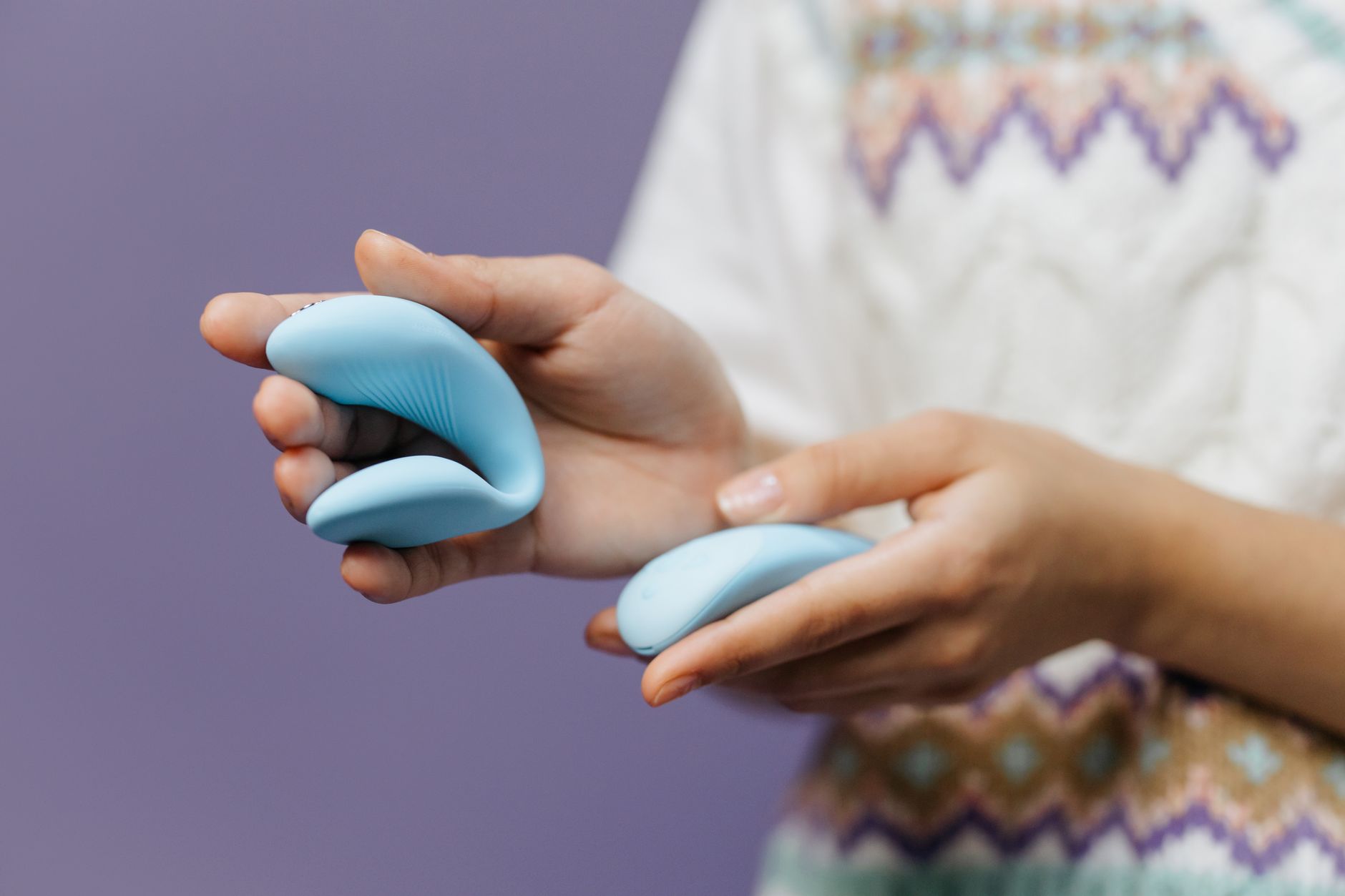
Let's talk about the gap
Years without pleasure. Maybe it wasn't a conscious choice. Maybe life happened. Illness, grief, burnout, depression, a relationship that didn't survive it. Or maybe you just stopped trying because touch felt too far away.
Here's what matters: your clitoris didn't forget. Your nervous system did, though. Rebuilding sensation after a long absence isn't about coaxing some magical spark back to life. It's about patient, methodical retraining of the pathways between your body and your brain.
Why a lemon vibrator works better after time away
Most vibrators rely on direct, repetitive buzzing against sensitive tissue. After years without stimulation, that can feel harsh, overwhelming, or numbing all at once. A lemon sucker, by contrast, uses gentle suction and rhythmic pulses that mimic the way a partner might use their mouth. This matters because suction activates different nerve endings than vibration alone.
The Lem and other lemon clitoral vibrators operate on a spectrum of suction patterns that start shallow and build gradually. You're not forcing anything. You're inviting sensation back, one pattern at a time. The tech feels less alien than traditional vibrators, which makes the mental component of returning to pleasure less fraught.
Starting from scratch: the first week
Don't use it yet. Seriously.
Spend the first three days just holding the device. Get comfortable with its weight, its shape, the sound it makes on the lowest setting when it's not touching you at all. This is called familiarization, and it sounds obvious until you're the person with years of sexual absence wondering if your body even works anymore. Your brain needs to catch up before your body can.
On day four or five, apply it to your outer labia only. Not the clitoris. The outer lips have fewer nerve endings and respond more slowly, which is exactly what you want. Run it across the skin without turning it on. Just texture. Just presence.
Turn it to pattern one (the gentlest suction setting on most lemon vibrators) and hold it there for 10-15 seconds at a time, with long breaks in between. You're not looking for arousal. You're looking for a signal. A twinge. A sense that something is waking up. Most people notice that signal within 48 hours of this gentle work.
Building the habit: weeks two through four
Once you've felt that first signal, you can move closer to the clitoris. Not directly on it yet. Instead, position the lemon vibrator about a half-inch away, so the suction effect is diffused. This is called indirect stimulation, and it's less intense than direct contact but still powerful enough to rebuild nerve responsiveness.
Stay on pattern one or two for these three weeks. Set aside 15-20 minutes every other day, ideally at the same time. Your nervous system likes predictability. Consistency matters more than intensity at this stage.
You're not trying to orgasm. That goal will actually slow you down. You're trying to notice: Does this feel different than it did yesterday. Am I less numb. Can I recognize arousal as it starts to arrive.
Keep a quick note afterward. One sentence. "Felt more sensation in left side." "Noticed my breath changed." This isn't journaling. It's data collection. It helps your brain understand that something is happening, which paradoxically helps it happen faster.
When you're ready: moving to direct contact
You'll know because the indirect approach will start to feel understimulating. Not disappointing. Understimulating. Like you're ready for more and your body is asking for it.
That's the signal to move the Lem directly onto the clitoral head. But stay on patterns one and two. Resist the urge to crank it up. I've seen people skip five patterns at once out of impatience, overstimulate their slowly reawakening nervous system, and then stop for another six months out of frustration.
Direct contact at low intensity is the sweet spot. You want to notice the sensation intensifying gradually over 3-5 minutes. You want time to adjust. You want to be able to back off if it feels overwhelming.
The mental piece (which matters more than the technical one)
Your clitoris isn't the only thing that's been dormant. Your sense of permission has been too. After years without pleasure, there's often an undertone of guilt. You don't deserve this time. Your body is too broken. It's frivolous to focus on sensation when there's still laundry to do.
That narrative will fight you harder than your body will.
One practice that helps: before you use the lemon vibrator, spend two minutes saying (out loud, weird as it feels) that you're choosing this time for yourself. Not to fix anything. Not to prove you can still orgasm. Just to practice feeling good. That's it. That's the entire permission you need.
If your mind wanders into logistics or to-do lists (it will), notice that it happened and gently bring your attention back to the sensation. Don't beat yourself up. This happens to everyone, especially people rebuilding after a gap. Your brain is going to try to keep you busy as a defense mechanism. It's not a failure.
Troubleshooting the common blocks
If you're not feeling anything after two weeks: you might need a water-based lubricant, even if you're generating your own wetness. The Lem works best when there's a slight film between the silicone and your skin. It helps the seal and changes how the suction feels. Try adding a small amount and retest.
If patterns one and two feel buzzy and uncomfortable: you might need even more indirect contact. Hold the vibrator a full inch away. Use only the outer edge of the suction. Give yourself permission to spend six weeks on this level. Rebuilding takes time, and faster isn't better.
If you feel aroused but can't seem to cross into orgasm: this is normal after a gap. Your body can remember the feeling before orgasm before it remembers how to trigger one. Keep using the vibrator without the goal of climax. The orgasm will often come back suddenly when you've stopped expecting it.
If orgasm comes back too intensely (overwhelming or almost painful): you've moved through the intensity too quickly. Back off to a lower pattern for a few sessions. Your nervous system needs gradual recalibration, not a shock.
The role of partners (if there is one)
If you're rebuilding pleasure alongside someone, that relationship becomes part of the healing. But it needs its own conversation. Your partner doesn't need to understand clitoral suction or the Lem specifically. They do need to understand that you're doing this work, that it's not about them, and that you're asking for their patience while your nervous system rewires.
Some couples find that adding the lemon vibrator to partnered time accelerates reconnection. Others find that solo use first is essential. There's no rule. What matters is that you're not using the vibrator to replace the intimacy gap. You're using it to rebuild the foundation so that intimacy becomes possible again.
When you might want more support
If after six weeks of consistent use you're still not noticing any sensation shift, check in with a pelvic floor physical therapist or a sex-positive therapist. Sometimes the nervous system needs professional help to rewire, and that's not a reflection on you or your effort. It's just biology asking for a specialist.
Similarly, if you notice pain (sharp, not just sensation overload), that warrants a checkup with a gynecologist. Pain isn't information about your capacity for pleasure. It's information about what might need medical attention first.
Rebuilding pleasure after years away is absolutely possible. The Lem and other lemon sucker vibrators are tools designed for exactly this journey. What matters most is patience with yourself and consistency. Your body knows how to feel good. It just needs time and permission to remember.
FAQ: Rebuilding Pleasure With a Lemon Vibrator
How long does it actually take to feel sensation again?
This varies widely, but most people notice a clear shift within 3-4 weeks of consistent use, about 3-4 times per week. Some notice it within days. Others need 8-12 weeks. The length of your gap and how much stress you've been under both affect the timeline. Be patient. Consistency matters more than speed.
Is it normal to feel numbness even when the vibrator is on?
Completely normal, especially in the first 1-2 weeks. Numbness often means your nervous system is cautiously waking up. It's not broken. It's protective. Keep using the vibrator gently and the numbness will gradually shift to sensation. If it doesn't after a full month, that's when you might consult a healthcare provider.
Can I use a lemon clitoral vibrator if I'm on antidepressants?
Yes, absolutely. Antidepressants can dampen sensation and libido, but they don't prevent orgasm or pleasure entirely. The Lem's suction method is particularly effective because it bypasses some of the sensitivity loss that medications can cause. You might need to spend a bit longer at each intensity level, but the process works the same way.
Should I be using lube the first time I use the vibrator?
Not necessarily for the first week, when you're using it on your outer labia with no suction. But once you move to indirect or direct clitoral contact, a bit of water-based lubricant makes a huge difference. It helps the Lem seal properly and changes how the suction feels. You're not adding lube because you're broken. You're adding it because it's what the device is designed to work with.
What if my partner wants to be involved but I'm not ready to involve them?
That's completely valid, and it needs a direct conversation. You might say something like: "I'm rebuilding some things on my own right now, and I need about a month of solo practice before I'm ready to bring you in." Most partners who care about your pleasure will respect that boundary. If they don't, that's worth exploring separately from the vibrator question.
Can a lemon vibrator hurt me if I use it wrong?
The Lem and similar lemon sexual toys are designed to be beginner-friendly and hard to misuse. The worst thing that typically happens is overstimulation, which feels uncomfortable but isn't damaging. If you experience sharp pain, stop immediately and check in with a doctor. Otherwise, trust the design. It was made for exactly this kind of gradual rebuilding work.