Let's be real about the buzz versus suction divide
If you've been using traditional vibrators your whole life, a lemon vibrator feels like switching from a phone call to an in-person conversation. They're both communication, but the information traveling between you is completely different. Most conventional vibrators use rapid oscillation, which creates a buzzing sensation across the clitoris. Lemon vibrators, including the Nancy Lem, use pulsed air suction instead. It's a fundamental difference in how the device interacts with your body, and that matters.
The confusion is totally understandable. Both work. Both can deliver orgasms. But they work through different neurological pathways, they feel different on different bodies, and honestly, most people benefit from having access to both.
What traditional vibrators actually do
A standard vibrator uses a motor that oscillates side-to-side or up-and-down at speeds typically ranging from 1,500 to 10,000 vibrations per minute. This creates a buzzing sensation that stimulates the nerve endings on and around the clitoris through direct friction and vibration. The sensation is consistent, predictable, and for many people, reliable.
The clitoris has roughly 8,000 nerve endings, and they respond well to this kind of stimulation. For people who've trained their bodies to respond to this sensation, it works beautifully. The intensity can usually be adjusted, but the fundamental stimulation method stays the same. You're essentially getting the same type of sensation, just turned up or down.
What's interesting is that this method requires direct contact and a certain amount of pressure. If your clitoris is sensitive, or if you're recovering from numbness, or if direct stimulation feels uncomfortable for any reason, traditional vibrators can feel overwhelming.
How lemon vibrators work differently
A lemon vibrator, or air-suction device, works on a completely different principle. Instead of vibrating against your clitoris, it creates rhythmic pulses of gentle suction and release. Think of it more like a wave motion than a buzz. The sensation stimulates the clitoris without requiring the same direct pressure.
This distinction is crucial. The suction-based approach activates different nerve pathways and creates a sensation that many people describe as deeper or more internal, even though the device isn't penetrating. Some describe it as a gentle pulling sensation, others as a wave building and releasing. The language people use varies, but the common thread is that it feels qualitatively different from buzz.
Patterns on lemon vibrators also tend toward pulsing rhythms rather than constant vibration. You might have a pattern that builds gradually, releases, pauses, and repeats. This gives your nervous system more variation and can actually make arousal feel more dynamic.
Why the sensation difference matters for your body
Here's where personal anatomy and history come in. Your clitoris has a unique sensitivity profile based on genetics, hormones, history, medications, stress levels, and what your body has learned to respond to over time.
Traditional vibrators work better when you need consistent, predictable stimulation and when your clitoris enjoys direct pressure. They're often faster to orgasm with, especially if you know exactly what pattern your body wants.
Lemon vibrators work better when you need gentler initial stimulation, when direct buzz feels too intense, or when you want to build arousal more gradually. They're particularly useful if you're rebuilding clitoral sensitivity after numbness or if your body needs more time to warm up before direct stimulation.

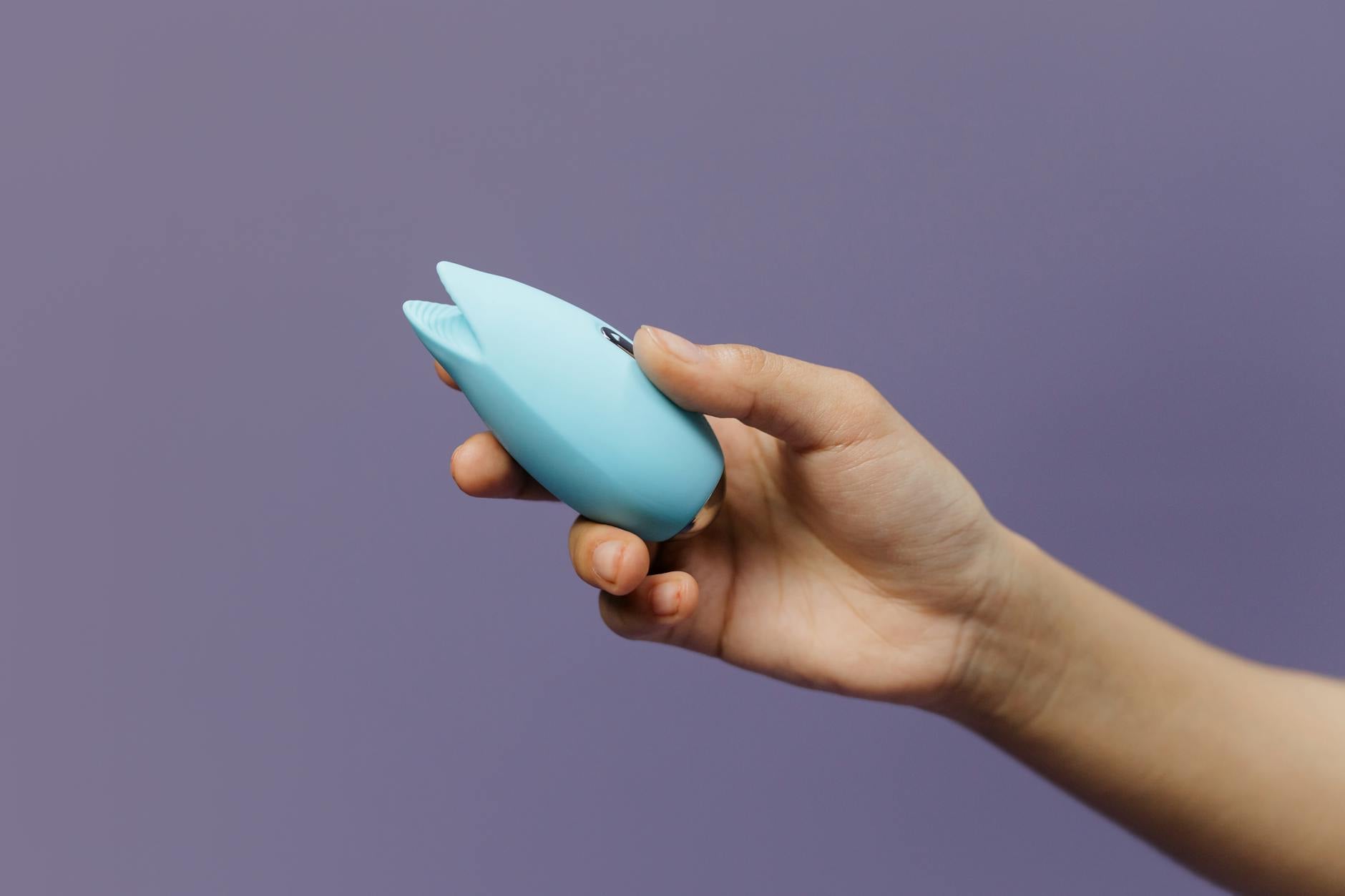
Photo by Anna Shvets on Pexels
The intensity and control conversation
Traditional vibrators often have more intensity levels because the fundamental mechanism is straightforward. You can make it buzz faster or slower, stronger or gentler. Most people can find their sweet spot within those parameters.
Lemon vibrators control intensity differently. Instead of just speed, they vary the depth and rhythm of the suction. Some devices have pattern options that do the varying for you. The Nancy Lem, for instance, offers different settings that change the pulsing rhythm rather than just raw power. This means you're not just choosing "strong" versus "gentle," you're choosing different types of sensations.
This can feel either liberating or limiting depending on your preference. If you like to dial in exactly how much power you want, traditional vibrators give you that control. If you like surrendering to a rhythm and letting your body respond to patterns, lemon vibrators can feel more intuitive.
The warmup and endurance factor
Most people find that lemon suction devices require less direct clitoral engagement to feel effective. You can rest the device gently and let it work, rather than having to position it with precision. This matters for endurance and for people who experience discomfort with extended direct stimulation.
Traditional vibrators, because they require more active positioning, can sometimes feel tiring if you're trying to hold them in exactly the right spot for extended periods. They're great for directed pleasure, but they ask more from your hand or partner.
For partnered play, this difference is real. A lemon vibrator can be used more passively by a partner, creating a sensation that's less about performance and more about mutual exploration.
Sensitivity recovery and the clinical angle
If you're working with numbness after medications or recovering from any situation where your clitoris needs gentle reawakening, the gentle suction approach of a lemon vibrator often works better as a first step. It stimulates nerves without overwhelming them.
Once sensitivity returns, you might find that you prefer traditional vibrators for intensity, or you might discover that you actually love the suction sensation and don't feel you need to graduate to anything else. There's no hierarchy here. Both are legitimate tools.
The texture and material factor
Most traditional vibrators are relatively rigid or semi-rigid. The motor is inside, the buzzing is consistent, and the overall experience is focused and concentrated.
Many lemon vibrators, including Nancy Lem options, use softer silicone that creates a gentle suction seal. The sensation of the device itself feels different against your skin. Some people find this more comfortable for extended use, especially if they have any sensitivity to harder materials.
Combination play and having both
Honestly, the people I work with who report the deepest pleasure tend to use both types. A traditional vibrator for directed, intense stimulation when they know exactly what they want. A lemon vibrator for exploration, for slower sessions, for partnered play, or for days when their body is more sensitive.
They're not competing products. They're different tools for different moments. A lemon vibrator isn't "better" than a traditional vibrator. It's different, and that difference is the point.
Finding your fit
Start with what your body is already drawn to. If you love traditional vibrators and they work, fantastic. But if you've ever thought "this feels too intense" or "I wish there was something gentler," or "I want to build arousal more slowly," then a lemon clitoral vibrator might fill a gap you didn't know existed.
The comparison isn't about replacing one with the other. It's about understanding that these devices create genuinely different sensations, and you deserve access to the one that matches what your body wants today.
People also ask
Can a lemon vibrator give you stronger orgasms than a traditional vibrator?
Strength isn't always about intensity. Some people experience more intense orgasms with traditional vibrators because the direct buzz creates a focused buildup. Others experience deeper, fuller orgasms with lemon vibrators because the suction-based sensation engages different nerves. Neither is objectively stronger. Both can be deeply satisfying. It depends on your body and what you're seeking in that moment.
Do lemon vibrators work if you're used to traditional vibrators?
Yes, but it takes a moment to adjust. Your body might initially feel like something's "wrong" because the sensation is different. Give it 5-10 minutes of exploration before deciding. Many people who've only used traditional vibrators find that suction-based devices open entirely new pleasure pathways they didn't know existed. Your preference might shift over time, or you might discover you love both equally.
Is suction actually better for sensitive clitorises?
Not universally better, but often better for initial exploration. Suction doesn't require the same direct pressure as traditional vibration, which can feel less overwhelming on days when your clitoris is tender. If you're recovering from numbness or dealing with medication-related sensitivity changes, suction-based devices often feel more approachable. That said, some sensitive clitorises prefer traditional vibrators at lower settings. Listen to your body.
Can you use a lemon vibrator on other parts of your body?
Technically yes, but lemon vibrators are designed for clitoral use. The suction mechanism is specifically engineered for that tissue. Using it elsewhere can feel ineffective or uncomfortable. Traditional vibrators, because they're more general-purpose, tend to work better on other erogenous zones. Each tool is optimized for where it's meant to go.
Which is quieter, a lemon vibrator or a traditional vibrator?
Lemon vibrators are typically quieter. The suction mechanism creates less audible noise than a motor oscillating at thousands of vibrations per minute. If noise is a concern for you, a lemon vibrator usually wins. This matters for privacy, for shared living spaces, and for anyone who finds loud buzzing distracting from arousal.
How do I know which one to start with if I've never used either?
If your body is sensitive or if you like to take pleasure slowly, start with a lemon vibrator. If you want reliable, straightforward stimulation and you're not sensitive to direct pressure, start with a traditional vibrator. Honestly, you can't go wrong. Both are designed for pleasure. The only "mistake" is choosing based on shame or pressure rather than what actually appeals to your body.
The real takeaway
Lemon vibrators and traditional vibrators aren't competing. They're options. Understanding how they differ means you can choose based on what your body needs, not on habit or assumption. Your pleasure deserves that level of intentionality.
If you're curious about exploring suction-based pleasure or want to learn more about how to use these devices for your specific situation, reach out. We're here to help you find what works.