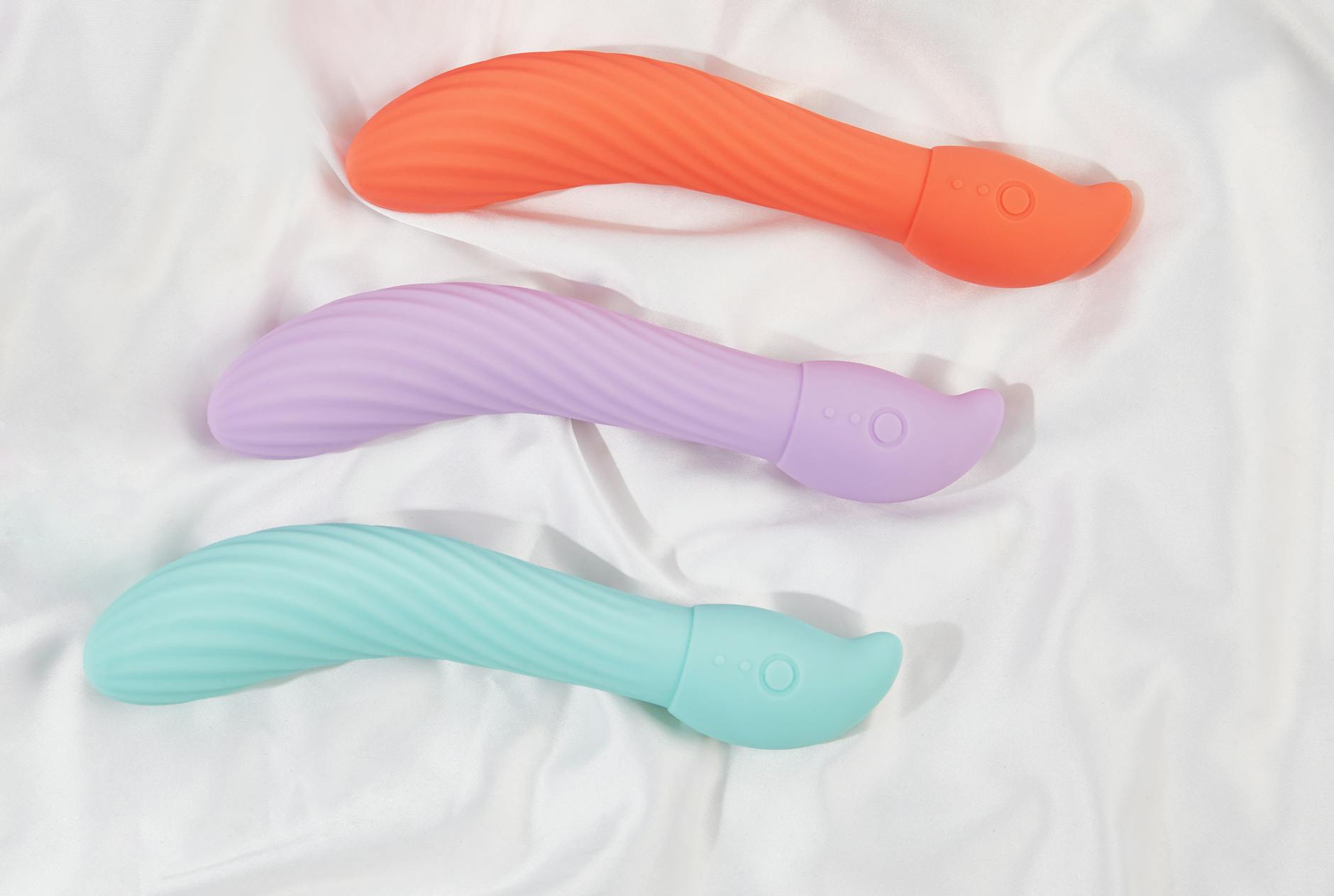
Here's what actually happens when one partner introduces a clitoral vibrator
Let's be real. When someone brings a lemon vibrator into a relationship, partners often worry it means something is broken. The sex isn't enough. They're not enough. The pleasure journey is over.
None of that is true, and I want to give you the evidence-backed picture of what actually unfolds when couples navigate this transition together.
The first myth to bust: it doesn't replace partnership
The fear that a lemon clitoral vibrator signals dissatisfaction is so common I hear it almost weekly. Here's the clinical reality. Solo pleasure and partnered pleasure activate different neural pathways. A lem vibrator optimizes one specific type of sensation. A partner optimizes presence, conversation, and emotional intimacy. They're not competitors.
In fact, research on couples who integrate toys show something counterintuitive. The couples who communicate openly about it report higher sexual satisfaction overall. Not because the toy is magical. Because the conversation required to introduce it opens a dialogue that usually stays shut.
That conversation often sounds like: "What do you actually want?" "What have you been too shy to ask for?" "What would make this better for you?" Those questions change everything.
Why introducing a lemon vibrator can actually strengthen a relationship
Three things happen in the relationships where this goes well:
1. One partner finally has permission to be selfish about their own pleasure. Many people (particularly women in heterosexual relationships) have spent years calibrating their experience around their partner's rhythm, stamina, and preferences. A clitoral vibrator like the Lem gives them back ownership. That ownership then translates to clearer communication about what feels good, what doesn't, and what they actually want. That information is gold in a long-term partnership.
2. Partners often become more curious rather than more distant. The fear of distance is the biggest barrier to the conversation. But what actually happens is curiosity. Some partners want to learn how to use the toy together. Some want to be nearby while their partner explores alone. Some want to understand what sensations the vibrator provides so they can anticipate and complement them. All of these are connection points.
3. Taking pressure off performance creates more actual desire. When penetrative sex is the only metric of success, both partners can feel trapped. A lemon sexual toy reframes sex as play, exploration, and pleasure rather than performance to be judged. That shift often increases desire in both partners because the stakes feel lower and the freedom feels higher.
What couples who've successfully integrated toys say shifts
I've worked with many couples navigating this, and the ones who report the most positive change share a few traits.
First, they stopped treating the toy as a secret. Secrecy breeds disconnection. Openness breeds curiosity. The couples who talk about when they want to use a lemon vibrator, why, and what they hope to experience are the ones who feel closer, not further apart.
Second, they separated "using a toy" from "having sex together." A lemon clitoral vibrator doesn't have to mean penetration is off the table. It doesn't have to replace partnership. Most healthy couples find a rhythm where solo use happens sometimes, partnered use with the toy happens sometimes, and sex without it happens sometimes. Variety is the actual ingredient.
Third, they got specific about consent and boundaries. This sounds formal, but it's the opposite. It's clarity. "I want to use this during foreplay" or "I want this to be my solo thing" or "I'd love for you to be in the room but not involved" are all legitimate boundaries. Partners who respect them build trust.
The timeline: what changes in month one, three, six, a year
If you're just introducing a lemon vibrator, here's what typically unfolds:
First month. Novelty, curiosity, maybe some awkwardness. One partner might feel displaced or unsure of their role. This is normal. The adjustment period is real. Many couples report that the first few uses feel a bit off simply because the mental load is higher.
Month three. The newness wears off. The toy becomes a tool rather than an event. Some couples find a natural rhythm of when and how it gets used. Some put it aside for a while. Both are fine. What matters is that it's no longer the elephant in the room.
Six months. If the relationship dynamic is solid, you'll usually see either deeper integration (the toy is woven into your sexual life naturally) or comfortable distance (you use it, your partner knows about it, it's not a thing). Either outcome is healthy.
Year one and beyond. The toy is furniture. It's there. You use it or you don't depending on what feels good that day. The relationship has either strengthened around the honesty, or it hasn't. But the toy itself isn't the variable anymore.
When integrating a lemon sexual toy actually reveals a relationship problem
I want to be honest about this too. Sometimes a toy doesn't strengthen a partnership. Sometimes it exposes a rift that was already there.
If your partner reacts to a lemon vibrator with shame, anger, or attempts to control your body, that's not about the toy. That's about control and insecurity in the relationship itself. Those issues exist whether the toy shows up or not. But the toy makes them visible.
If communication collapses when you try to talk about pleasure, desire, and your body, that's a relationship dynamic worth addressing with a professional. A therapist can help you both develop tools for conversations that feel safer.
How to actually have the conversation
Okay, so you want to bring this up. Here's what works:
Pick a time when you're both calm and not in the bedroom. The conversation should happen somewhere neutral. Lead with your own experience, not criticism. "I've been curious about exploring my own pleasure more and I'm thinking about trying a clitoral vibrator" is different than "You're not giving me what I need."
Answer the question they might not ask but are definitely thinking: "This isn't about you or us. This is about me getting to know my own body better." That's usually the truth.
Invite curiosity without pressure. "I'd love if you were open to learning about this with me, but I also understand if you need some time to adjust to the idea." Give them space to have feelings about it.
If they want to be involved, great. If they don't, that's okay too. As long as everyone consents to what's happening, both approaches work.
Many couples find that once the initial conversation happens, the anxiety drops dramatically. You're no longer hiding something. You're partners navigating a choice together.
Why lemon clitoral vibrators specifically are showing up in long-term relationships
The design of a lemon vibrator like the Lem matters here. It's precise, it's not penis-shaped, and it's ergonomically built for sustained sensation without fatigue. Partners often find that these qualities make the tool feel less threatening because it's so clearly designed for a different purpose than partnered sex.
It's not trying to replicate a partner. It's enhancing personal pleasure in a way that looks and feels completely different. That clarity can actually make the integration easier because the threat narrative falls apart faster.
FAQ: What couples actually ask
Does using a vibrator change how my body responds to my partner?
Your neural pathways are plastic, which means they adapt. Some people find they need different stimulation after regular vibrator use. But here's the thing. That's not broken. That's information. You now know what works. You can communicate that to your partner or work together to find new rhythms that satisfy you both.
Will my partner feel less important if I use a toy?
Not if you're honest about the fact that you value their presence for different reasons. The toy is for one specific type of sensation. Your partner is for presence, conversation, affection, and partnership. Those are not in competition.
How often is too often to use a lemon vibrator?
There's no magic number. Some people use lemon sexual toys daily, some weekly, some monthly. What matters is that it's a choice, not a compulsion, and that it's not replacing partnered intimacy if that's something you both value.
Should my partner use the vibrator on me, or should I use it on myself?
Both are legitimate. Some couples find that partnered use adds novelty and connection. Some prefer solo use because it removes performance anxiety. You can do both depending on the day and what you're both in the mood for.
What if my partner is insulted by the suggestion?
Take that seriously. It usually indicates deeper beliefs about bodies, pleasure, or gender that won't resolve by forcing the conversation. A couples therapist can help you both understand where the defensiveness is coming from. Sometimes it's shame. Sometimes it's misunderstanding. Sometimes it's genuinely a values difference. All of those are workable, but they require patience.
Can a toy fix a broken intimate connection?
No. A toy is a tool, not a band-aid. If intimacy is struggling, the issue is usually communication, resentment, or disconnection. A vibrator won't fix that. But the conversation about introducing a toy might open the door to the bigger conversation you actually need to have.
The long view
Relationships shift over time. Desire changes. Bodies change. What worked at 25 doesn't always work at 45. A lemon vibrator isn't a sign that something is ending. It's often a sign that something is evolving.
The couples who navigate this well are the ones who treat pleasure as collaborative rather than competitive, who stay curious about each other's bodies and needs, and who can talk about sex without shame.
If you're thinking about introducing a vibrator into your relationship, start with the conversation. The tool is just the tool. The trust, honesty, and curiosity are what actually matters.
If the conversation feels stuck, reach out. A conversation with a professional can help both partners find their footing again.